From AI Pilots to Production: Why 40% of Agentic Projects Will Fail by 2027
AI pilots are easy to start. That is part of the problem.
A small team experiments with a tool, connects a few data sources, shows early results, and momentum builds quickly. It feels like progress. On paper, it is.
But when it is time to turn that pilot into something the business can actually rely on, things slow down. Or worse, they quietly break.
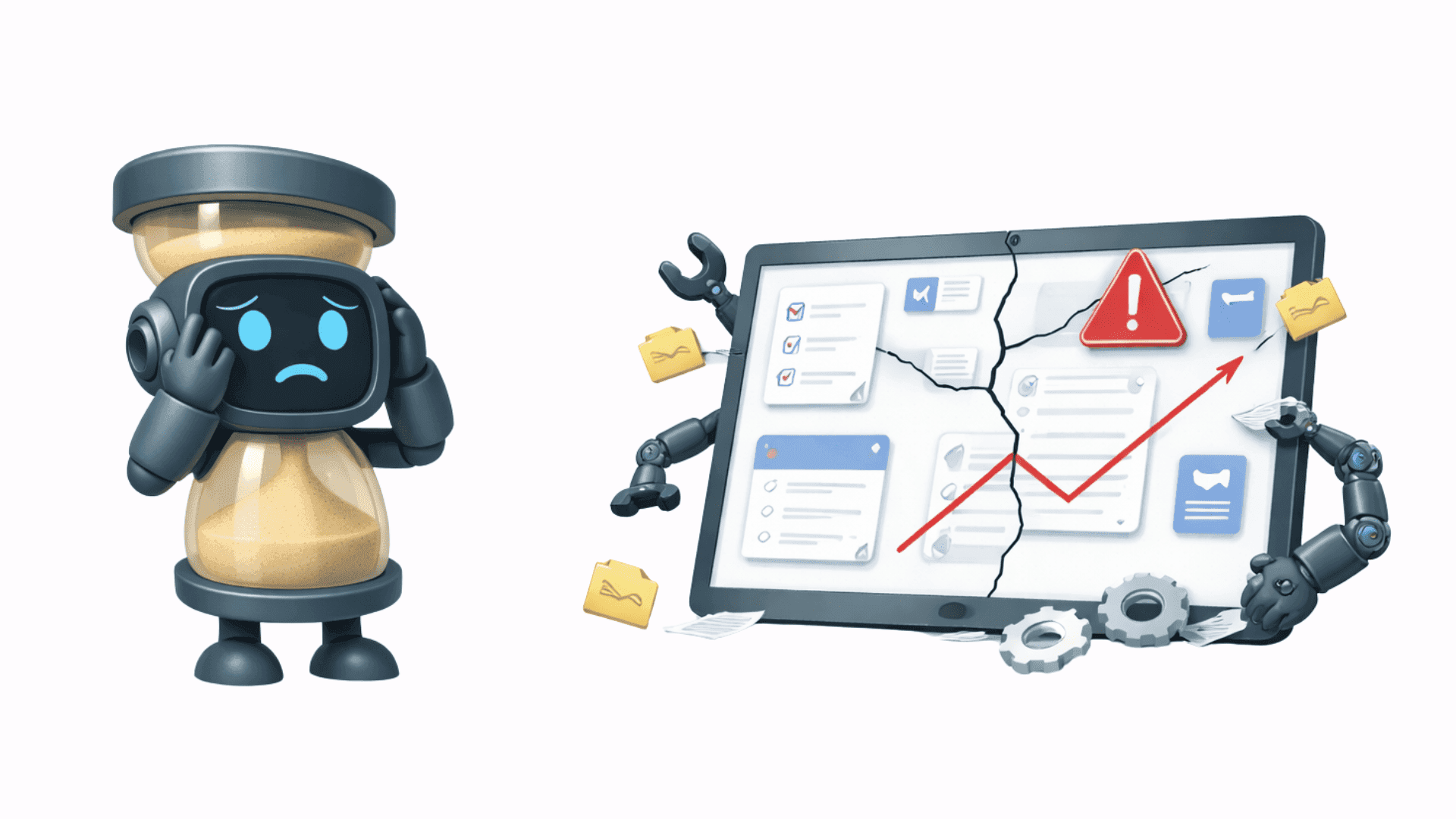
By 2027, a large share of agentic AI projects will fail at this exact point. Not because the models are not capable, but because the step from experimentation to production requires a completely different level of thinking.
Why AI pilots fail to scale in real business environments K.B Consultancy insights
Most pilots are not designed to solve a concrete problem. They are designed to explore what is possible. That is a useful starting point, but it creates a gap later.
You end up with something that works in isolation, without a clear role inside the business.
Another issue is infrastructure. Pilots often run on temporary setups. Light integrations, partial datasets, sometimes even manual steps hidden in the background. It works well enough for a demo, but it cannot handle real operational load.
Then there is organizational misalignment. The team building the pilot understands it. The rest of the company does not. When it needs to be adopted across departments, resistance shows up quickly. Not because people are against AI, but because the system does not fit how they actually work.
At K.B Consultancy, this is where most projects get stuck. The technology is ready, but the business around it is not.
The production gap in agentic AI systems and why it matters
Moving into production forces a different standard.
Systems need to be reliable, not just impressive. Data pipelines have to be stable, not patched together. Monitoring becomes essential, because once an AI system runs autonomously, small errors can scale fast.
This is the part that rarely gets enough attention during pilot phases.
A workflow that works 80 percent of the time in a test environment might completely fail in production. Not because of one big issue, but because of small inconsistencies that compound. Missing data, unclear triggers, edge cases that were never considered.
Production systems do not forgive that kind of looseness.
What changes here is accountability. Once a system is live, it is no longer an experiment. It affects customers, revenue, and internal operations directly.
That shift is often underestimated.
The three pillars of successful AI deployment according to K.B Consultancy
There are three areas that consistently determine whether an AI project makes it past the pilot phase.
Strategy comes first. Without a clear business outcome, the system has no direction. It might perform well technically, but it will not move anything that matters. This is where many pilots fall short. They prove capability, not value.
Infrastructure is what carries the system under real conditions. Scalable integrations, clean data flows, and systems that can handle volume without breaking. This is not the visible part of AI, but it is the part that decides whether it survives.
Adoption is usually the weakest link. Even a well built system fails if teams do not use it properly. That comes down to how well it fits existing workflows and whether people trust it enough to rely on it.
These three are connected. You cannot fix one in isolation and expect the rest to work.
This is also where K.B Consultancy takes a different stance. AI is not introduced as a tool first. It is introduced as part of a system that already makes sense operationally.
How to avoid failure in agentic AI projects and build for scale
The biggest mistake is treating a pilot as something temporary that can be “cleaned up later.”
In practice, later rarely comes.
If a system is expected to scale, it needs to be designed with that in mind from the beginning. That does not mean overengineering, but it does mean making deliberate choices about structure, data, and ownership early on.
Focusing on workflows instead of tools is another shift that matters. Tools change. Workflows define how the business runs. If you automate a tool, you gain efficiency. If you redesign and automate a workflow, you change outcomes.
Measurement is what keeps everything grounded. Without clear performance tracking, it is impossible to know whether the system is actually improving anything. This is where many AI projects become difficult to justify over time.
A system that cannot prove its value will eventually be questioned, no matter how advanced it looks.
AI success depends on scaling what works not just starting
There is no shortage of companies experimenting with AI right now. The barrier to entry is low, and the initial results are often promising.
But the real separation is happening after that first phase.
Some companies manage to turn those early experiments into stable, scalable systems that integrate into daily operations. Others remain stuck in a loop of pilots that never fully land.
The difference is not technical skill. It is how seriously the production phase is taken.
AI success is not about starting fast. It is about building something that holds up when the business depends on it.
24 March 2026